

Contact Lens Exams in Copperas Cove
Comfortable contact lens wear starts with understanding your eyes. At VIEW Cove, our contact lens exams evaluate your prescription, eye health, and lens fit to help determine which contact lens options may work best for your vision and daily routine.
Finding the Right Contact Lenses Starts with a Proper Fit
Whether you're trying contact lenses for the first time or have been wearing them for years, the right lenses should provide clear vision and fit your eyes properly. A contact lens prescription involves more than knowing how strong your glasses are.
Our Copperas Cove optometrist takes the time to understand your visual needs, examine your eyes, and evaluate how contact lenses fit and perform. We explain your options, discuss proper lens care, and help you make informed decisions about your contact lens wear.

Visit Us Today

Visit Our Location
What Is a Contact Lens Exam?
A contact lens exam evaluates whether contact lenses are appropriate for your eyes and which lens prescription, material, and design may work best.
Unlike glasses, contact lenses sit directly on the eye's surface. Their fit, movement, and interaction with your tear film can affect both comfort and eye health.
A contact lens exam may include additional measurements and assessments beyond those performed during a routine eye examination.
How Is a Contact Lens Exam Different from a Regular Eye Exam?
A comprehensive eye exam evaluates your vision, prescription, and overall eye health. It helps identify refractive errors and signs of conditions that may require additional attention.
A contact lens exam focuses specifically on whether contact lenses are suitable for your eyes and how they fit.
Because contact lenses rest directly on the eye, your optometrist needs to evaluate factors such as corneal shape, tear film, lens movement, and the condition of the ocular surface. Your glasses prescription also isn't interchangeable with a contact lens prescription.
A contact lens prescription includes information specific to the lens design and fit, such as the brand or manufacturer, lens power, base curve, and diameter when applicable.
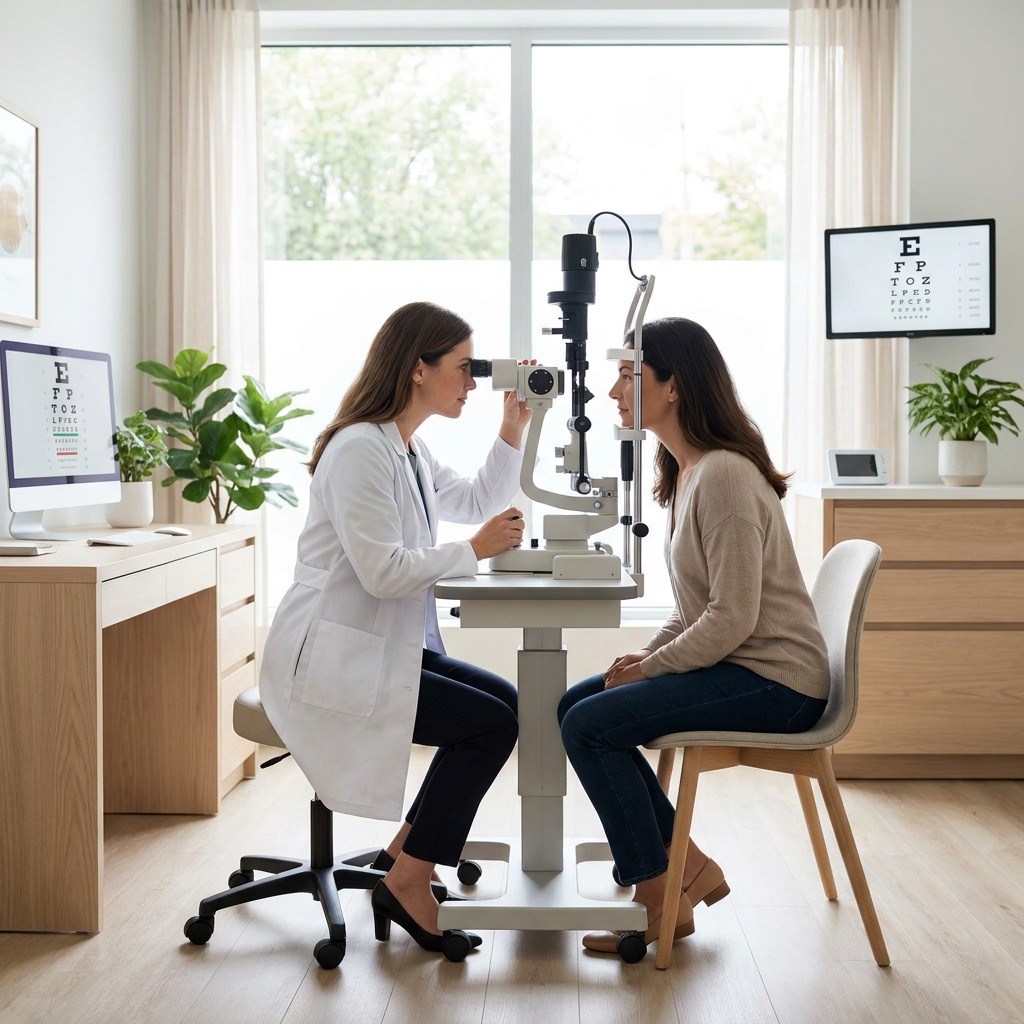
What Happens During a Contact Lens Exam?
Your contact lens evaluation will depend on whether you're a new wearer, currently use contacts, or have specific concerns about comfort or vision. The examination may include:
- Prescription assessment: Determining the lens power needed for appropriate vision correction.
- Corneal evaluation: Assessing the shape and health of the eye's front surface.
- Tear film assessment: Checking factors that may affect contact lens comfort.
- Lens fitting: Evaluating how trial lenses sit and move on your eyes.
- Vision assessment: Checking how clearly you see while wearing the lenses.
- Eye health evaluation: Looking for irritation, inflammation, or other concerns that may affect lens wear.
- Lens care guidance: Reviewing insertion, removal, cleaning, replacement, and safe wearing habits.
Types of Contact Lenses
Different contact lenses are designed for different prescriptions, wearing preferences, and eye health needs. Your optometrist can help determine which options may be appropriate based on your examination findings.
Daily Disposable Contact Lenses
Daily disposable lenses are designed to be worn once and discarded after use.
They eliminate the need for overnight storage and routine lens cleaning, making them a convenient option for some patients. However, daily disposables still require proper handling and should not be worn longer than directed.
Reusable Soft Contact Lenses
Reusable soft contact lenses are designed to be worn according to a specified replacement schedule. Depending on the product, lenses may be replaced every two weeks, monthly, or at another manufacturer-recommended interval. These lenses require appropriate cleaning, disinfection, and storage between uses.
Toric Contact Lenses for Astigmatism
Toric contact lenses correct certain types and degrees of astigmatism.
They have specific optical features that help provide appropriate correction while maintaining the intended orientation on the eye. A professional fitting helps determine whether a toric lens design may provide suitable vision and comfort.
Multifocal Contact Lenses
Multifocal contact lenses provide different optical powers to help patients see at multiple distances. They may be an option for adults experiencing presbyopia, the age-related reduction in near focusing ability. Not everyone adapts to multifocal lenses in the same way, and some patients may still need glasses for certain activities.
Rigid Gas-Permeable Contact Lenses
Rigid gas-permeable lenses are made from firm, oxygen-permeable materials. They may provide useful optical correction for certain prescriptions or corneal conditions. These lenses require a different fitting process and adaptation period than conventional soft contact lenses.
Scleral Contact Lenses
Scleral contact lenses are larger specialty lenses designed to rest on the white part of the eye while vaulting over the cornea. They may be appropriate for certain patients with irregular corneas, keratoconus, or other conditions that make conventional contact lens wear difficult.
A specialized fitting is necessary to determine whether scleral lenses may be suitable.
What Should First-Time Contact Lens Wearers Expect?
Trying contact lenses for the first time takes practice. Your optometrist will determine whether contacts are appropriate for your eyes and discuss which lens options may suit your needs.
Before you begin wearing lenses independently, you'll need to learn how to insert and remove them safely. Our team can also explain cleaning, storage, replacement schedules, and habits that help reduce the risk of contact lens complications.
Some patients adapt quickly, while others need more time or additional fitting adjustments.
The goal is to help you feel informed and confident about caring for your lenses.
Frequently Asked Questions
Do I Need a Separate Exam for Contact Lenses?
A contact lens fitting involves additional assessments beyond a standard glasses prescription. Your optometrist needs to evaluate lens fit, eye health, and the specific contact lens parameters appropriate for your eyes.
Can I Use My Glasses Prescription to Order Contact Lenses?
No. Glasses and contact lens prescriptions aren't interchangeable. Contact lens prescriptions include information specific to the lens design, fit, and product prescribed.
Can I Wear Contact Lenses If I Have Dry Eyes?
Some patients with dry eye can wear contact lenses comfortably with appropriate management or different lens options. Others may need treatment before resuming contact lens wear. Your optometrist can evaluate your eye health and discuss suitable options.
How Long Does a Contact Lens Fitting Take?
The time required depends on your prescription, the lens type, and whether you're a new or experienced wearer. Some patients need additional trial lenses or follow-up visits before finalizing their prescription.
Can Children and Teenagers Wear Contact Lenses?
Some children and teenagers can successfully wear contact lenses if they can follow proper handling and hygiene instructions. Suitability depends on eye health, maturity, prescription, and individual needs.


Let's Find Contact Lenses That Fit Your Needs
Whether you're trying contacts for the first time, updating your prescription, or looking for a more comfortable option, VIEW Cove provides personalized contact lens evaluations and clear guidance. Schedule an appointment to explore lenses suited to your eyes, vision, and everyday routine.