

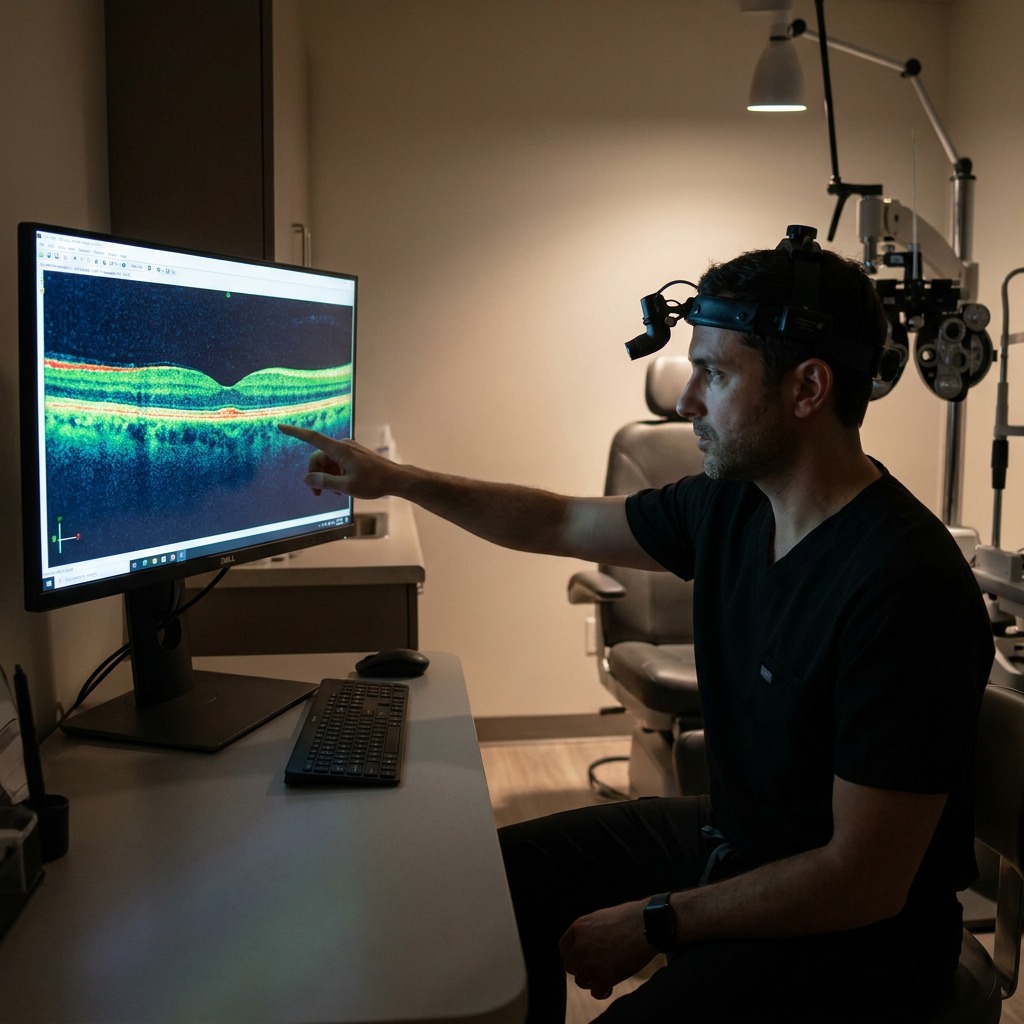

Surgical Retina Care in Copperas Cove, TX
Retinal conditions can change how you see and, in some cases, require urgent specialist treatment. VIEW Cove provides eye health evaluations and appropriate referrals to help patients understand retinal concerns and coordinate care with a retinal specialist when necessary.
Understanding Your Retina & Care Options
Changes in your vision can raise questions, especially when you've been told that something may be affecting your retina. Some retinal conditions develop gradually, while others require immediate medical attention to reduce the risk of permanent vision loss.
Our Copperas Cove optometrist evaluates your vision and eye health, explains concerning findings, and helps determine when you may need specialized retinal care. When a condition requires treatment beyond optometric care, we can coordinate a referral to an ophthalmologist or retinal specialist.

Visit Us Today

Visit Our Location
What Is Surgical Retina Care?
Surgical retina care focuses on conditions affecting the retina, the light-sensitive tissue lining the back of your eye. The retina converts light into signals that travel through the optic nerve to your brain, allowing you to see.
When the retina becomes damaged or develops certain diseases, your vision may become blurry, distorted, or partially obstructed. Some conditions can cause permanent vision loss without timely treatment.
Retinal specialists are ophthalmologists with additional training in diagnosing and treating diseases of the retina and vitreous, the gel-like substance that fills the inside of the eye. VIEW Cove does not perform retinal surgery. We help evaluate eye health concerns and coordinate appropriate specialist referrals when needed.
When Should You Seek Care for Retinal Symptoms?
Some retinal conditions develop without noticeable symptoms early on. Others can cause sudden changes that require immediate assessment. Symptoms that may indicate a retinal concern include:
- New flashes of light in your vision.
- A sudden increase in floaters.
- A dark shadow or curtain moving across part of your vision.
- Sudden blurry or distorted vision.
- Straight lines appearing wavy or bent.
- A new dark or missing area in your central vision.
- Sudden loss of peripheral or central vision.
- Unexpected changes in vision in one eye.
These symptoms don't automatically indicate a retinal disease, but some can signal conditions that require urgent treatment.
Retinal Conditions That May Require Specialized Care
Several conditions can affect the retina and surrounding structures. Some require ongoing monitoring, while others may need medical procedures or surgery performed by a retinal specialist.
Retinal Tears and Retinal Detachment
A retinal tear occurs when the retina develops a break. In some cases, fluid can pass through the opening and cause the retina to separate from the underlying tissue, resulting in retinal detachment. Symptoms may include sudden flashes of light, new floaters, or a shadow moving across your field of vision. Retinal detachment is a medical emergency that can lead to permanent vision loss.
Diabetic Retinopathy
Diabetic retinopathy occurs when diabetes damages blood vessels in the retina.
The condition may develop without noticeable symptoms initially. As it progresses, abnormal blood vessels, bleeding, or swelling can affect vision. Some patients require ongoing monitoring, while others may need retinal injections, laser treatment, or surgery to manage complications.
Age-Related Macular Degeneration
Age-related macular degeneration (AMD) affects the macula, the central part of the retina responsible for detailed vision. It may cause blurry central vision, distortion, or difficulty reading and recognizing faces. Dry AMD often progresses gradually, while wet AMD involves abnormal blood vessel growth and can cause more rapid vision changes.
Macular Holes
A macular hole is a small opening that develops in the macula, the part of the retina responsible for sharp central vision. It may cause blurry or distorted central vision, difficulty reading, or a small missing area in the center of your vision. Some macular holes require surgical treatment, while others may be monitored depending on their characteristics.
Epiretinal Membranes
An epiretinal membrane is a thin layer of tissue that develops on the surface of the retina, usually over the macula. As the membrane contracts, it may distort the underlying retinal tissue and cause blurry or wavy vision. Mild cases may not require treatment. When symptoms significantly interfere with vision, a retinal specialist may recommend surgery to remove the membrane.
Vitreous Hemorrhage
A vitreous hemorrhage occurs when blood enters the vitreous, the gel-like substance filling the eye. It can cause sudden floaters, cloudy vision, or significant visual obstruction. Possible causes include diabetic retinopathy, retinal tears, trauma, and other eye conditions. Treatment depends on the underlying cause and severity. Some cases may be monitored, while others require laser treatment or surgery.
What Happens If You Need Retinal Surgery?
If your examination reveals findings that may require surgical treatment, the next step is an evaluation by a retinal specialist. The specialist will assess your condition, determine whether surgery is appropriate, and explain the available treatment options.
Your care may involve additional imaging, discussion of the procedure, and instructions for preparing for treatment. The surgical team will also explain potential risks, expected recovery, and follow-up requirements.
VIEW Cove can help coordinate appropriate referrals and continue providing optometric care as your individual treatment plan indicates.
Frequently Asked Questions
Can an Optometrist Detect Retinal Problems?
Yes. Optometrists can evaluate retinal health during comprehensive eye examinations and identify findings that may require additional testing or referral to a retinal specialist.
Does Every Retinal Condition Require Surgery?
No. Some retinal conditions can be monitored, while others may be treated with medication, injections, or laser procedures. Surgery is recommended only when appropriate for the specific condition.
Are Flashes and Floaters Always an Emergency?
Not always, but new flashes, a sudden increase in floaters, or a shadow across your vision can indicate a retinal tear or detachment. These symptoms require immediate professional assessment.
Can I Return to VIEW Cove After Retinal Treatment?
Depending on your diagnosis and specialist's recommendations, VIEW Cove may continue providing routine examinations and other appropriate optometric care. Your retinal specialist will determine the follow-up required for your condition.


Understand Your Retinal Health
Changes in your vision can be concerning, especially when they involve the retina. At VIEW Cove, we provide thoughtful eye health evaluations, clear explanations, and appropriate coordination with retinal specialists when you need additional care. Schedule an appointment to discuss ongoing retinal concerns and your eye health.