

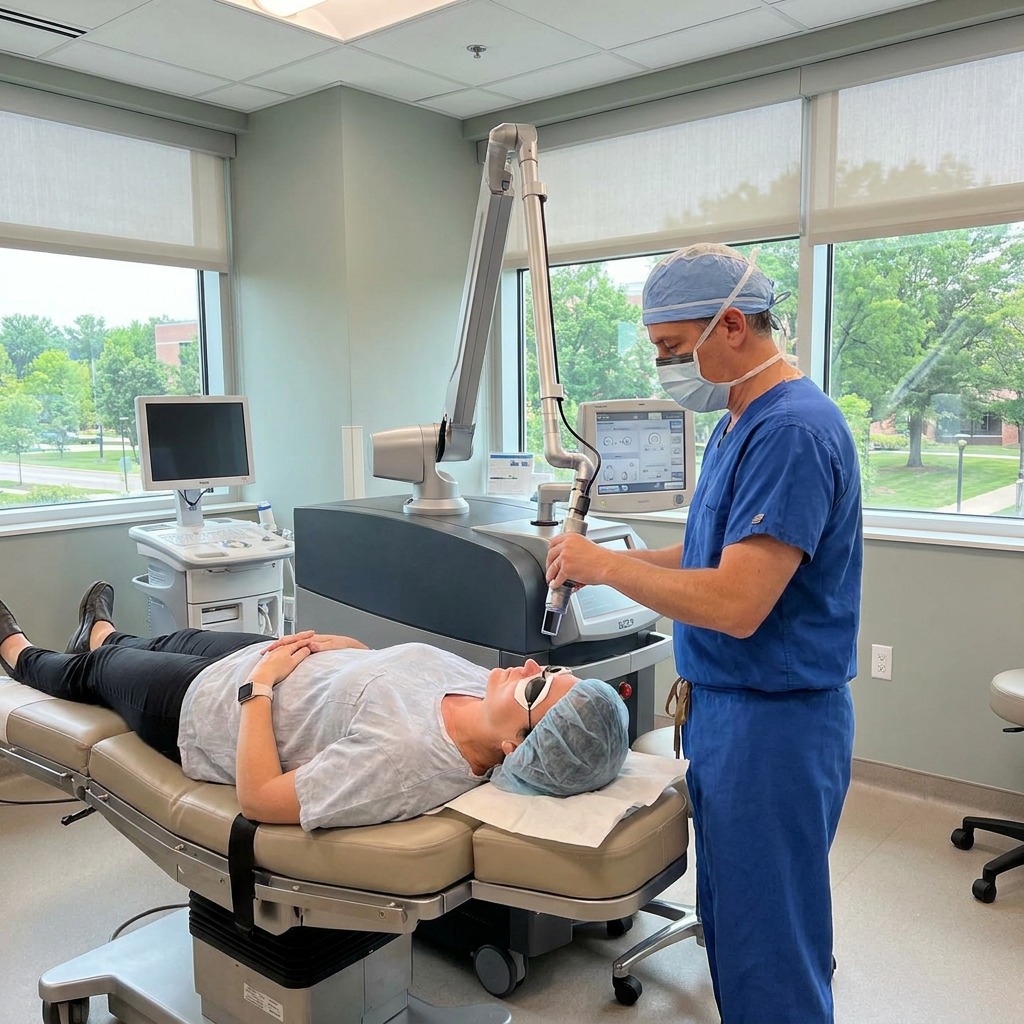

LASIK Evaluations in Copperas Cove, TX
Thinking about life with less dependence on glasses or contact lenses? VIEW Cove provides LASIK evaluations and co-management to help you understand your options, determine whether laser vision correction may be right for you, and coordinate care with an experienced ophthalmologist.
Exploring LASIK Starts with Your Eyes
Whether you're tired of reaching for your glasses every morning or find contact lenses inconvenient during certain activities, LASIK may be an option worth exploring. But not everyone is a good candidate, and the decision involves more than your prescription.
Our Copperas Cove optometrist takes the time to understand your vision goals, evaluate your eye health, and explain what may affect your eligibility for laser vision correction. If LASIK appears appropriate, we can help coordinate a surgical consultation and follow-up care with an ophthalmologist.

Visit Us Today

Visit Our Location
What Is LASIK Eye Surgery?
LASIK stands for laser-assisted in situ keratomileusis. It's a type of refractive surgery that uses a laser to reshape the cornea, the clear front surface of your eye, to change how light focuses on the retina.
LASIK is commonly used to correct nearsightedness, farsightedness, and astigmatism in eligible patients. By changing the shape of the cornea, the procedure may reduce a person's dependence on glasses or contact lenses. However, results vary, and some patients may still need vision correction for certain activities.
LASIK doesn't prevent age-related vision changes, such as presbyopia, or eliminate the need for ongoing eye health examinations. An ophthalmologist performs LASIK surgery. VIEW Cove provides evaluations and co-management to help patients understand their options and coordinate appropriate care.
Who Is a Good Candidate for LASIK?
LASIK candidacy depends on several factors, including your prescription, corneal health, overall eye health, and medical history. Although many adults may qualify for laser vision correction, not everyone is a suitable candidate. Your eye care team will consider factors such as:
- Age and whether your prescription has remained stable.
- The type and degree of refractive error.
- Corneal thickness and shape.
- Overall eye health.
- Dry eye symptoms or ocular surface conditions.
- Certain medical conditions or medications.
- Pregnancy or breastfeeding status when relevant.
- Your expectations and visual goals.
A comprehensive evaluation and consultation with a refractive surgeon are necessary to determine whether the procedure is appropriate.
What Happens During a LASIK Evaluation?
A LASIK evaluation helps determine whether your eyes may be suitable for laser vision correction and whether further surgical assessment is recommended. We'll review your vision concerns, prescription history, medical history, and reasons for considering LASIK. Depending on your needs, the evaluation may include:
- Visual acuity testing to assess how clearly you see.
- A prescription assessment to evaluate your refractive error.
- Review of previous prescriptions to assess stability.
- Examination of your cornea and overall eye health.
- Evaluation of dry eye symptoms or other ocular surface concerns.
- Discussion of your lifestyle and visual expectations.
- Additional measurements or specialist testing when clinically appropriate.
What Could Make Someone Unsuitable for LASIK?
Some eye conditions or health factors may make LASIK less appropriate or require additional evaluation before surgery. These factors don't always mean that laser vision correction is impossible, but they may influence which procedures are considered.
An Unstable Prescription
If your glasses or contact lens prescription is still changing, LASIK may not provide the long-term correction you're hoping for. Your eye care team will review your prescription history and determine whether it has remained sufficiently stable.
Thin or Irregular Corneas
LASIK changes the cornea's shape by removing a small amount of corneal tissue.
Patients with certain corneal abnormalities, including keratoconus, may not be suitable candidates because of the risk of complications. A refractive surgeon will assess corneal shape, thickness, and other factors before recommending surgery.
Dry Eye Disease
LASIK can temporarily worsen dry eye symptoms, and some patients experience persistent dryness after surgery. If you already have dry eye disease, your optometrist may recommend evaluation or management before considering laser vision correction.
Certain Eye or Medical Conditions
Some eye diseases, autoimmune conditions, medications, or other health factors may affect healing or increase surgical risks. Your eye care team will review your medical history and determine whether additional evaluation is necessary.
Unrealistic Expectations
LASIK may reduce dependence on glasses or contact lenses, but it doesn't guarantee perfect vision or eliminate the possibility of needing corrective lenses later. Understanding the potential benefits, limitations, and risks is an important part of deciding whether surgery is right for you.
What Is LASIK Co-Management?
LASIK co-management is a coordinated approach to care involving your optometrist and the ophthalmologist performing the surgery. Our Copperas Cove optometrist evaluates your vision and eye health, discusses your goals, and determines whether a surgical consultation is appropriate.
The ophthalmologist performs the detailed surgical assessment, determines your eligibility, explains the procedure and its risks, and performs the surgery. Depending on the surgical team's arrangements and your individual needs, your optometrist may also provide certain follow-up examinations after the procedure.
VIEW Cove does not perform LASIK surgery. We help patients understand their options and coordinate appropriate care with surgical providers.
Will You Still Need Glasses After LASIK?
LASIK may reduce your dependence on glasses or contact lenses, but it doesn't guarantee that you'll never need them again. Some patients may still require corrective lenses for certain activities, particularly if they have residual refractive error or experience changes in their vision over time.
LASIK also doesn't prevent presbyopia, the age-related reduction in the eye's ability to focus on nearby objects. Many adults eventually need reading glasses as they get older, even if they previously had successful laser vision correction.
Are There Alternatives to LASIK?
LASIK isn't the only option for correcting refractive errors. Depending on your prescription, eye health, and personal preferences, other approaches may be appropriate. These can include glasses, contact lenses, or alternative refractive procedures performed by an ophthalmologist.
For some patients, procedures such as PRK or implantable collamer lenses may be considered, although each has different eligibility requirements, benefits, and risks. Your ophthalmologist can determine which surgical options, if any, may be suitable.
Frequently Asked Questions
Can an Optometrist Determine If I'm a Candidate for LASIK?
An optometrist can evaluate your prescription and eye health to help determine whether LASIK may be worth considering. Final surgical eligibility is determined by the ophthalmologist performing the procedure.
Does VIEW Cove Perform LASIK Surgery?
No. VIEW Cove provides LASIK evaluations and co-management. An ophthalmologist performs LASIK surgery, and we can help coordinate appropriate surgical care.
Is LASIK Permanent?
LASIK permanently changes the shape of the cornea, but your vision can still change over time. Age-related changes, including presbyopia, may lead to a need for glasses or other correction later.
Can I Have LASIK If I Have Dry Eyes?
Dry eye disease may affect LASIK candidacy and can increase the likelihood of postoperative discomfort. An evaluation can help determine whether your dry eye needs treatment before considering surgery or whether another option may be more appropriate.


Find Out Whether LASIK May Be Right for You
If you're considering laser vision correction, understanding your eyes and your options is an important first step. At VIEW Cove, we provide personalized LASIK evaluations, clear explanations, and coordinated care with ophthalmologists when surgery is appropriate. Schedule an appointment to discuss your vision goals and what may come next.