

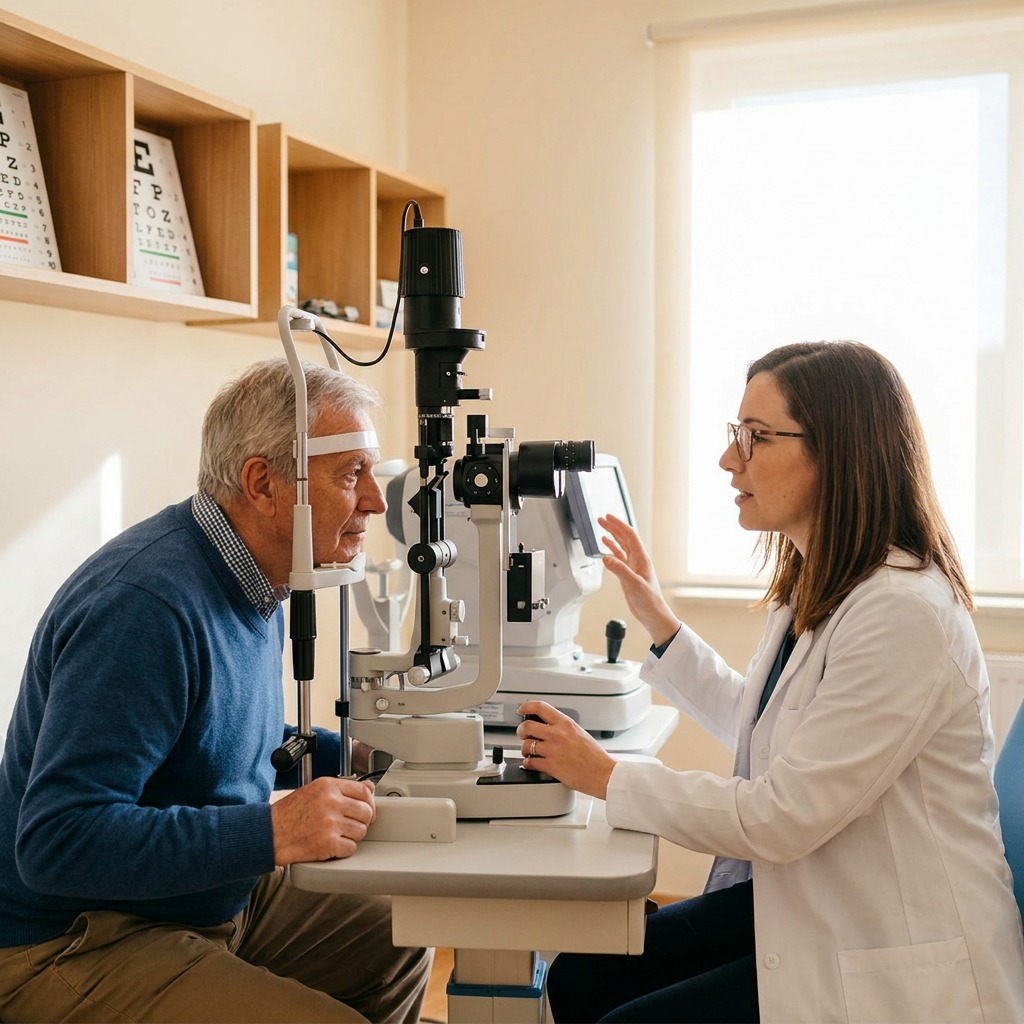

Cataract Care in Copperas Cove, TX
Blurry vision, increased glare, and difficulty seeing at night can make everyday activities more challenging. VIEW Cove provides cataract evaluations and co-management to help you understand changes in your vision, explore your options, and coordinate care when surgery may be appropriate.
Understanding Your Cataracts & What Comes Next
Finding out you have cataracts doesn't necessarily mean you need surgery right away. Cataracts often develop gradually, and the right time to consider treatment depends on how much they're affecting your vision and daily activities.
Our Copperas Cove optometrist evaluates your eye health, explains how cataracts may be affecting your eyesight, and helps you understand your options. If surgery becomes appropriate, we can coordinate your care with an ophthalmologist and provide follow-up support as part of your treatment plan.

Visit Us Today

Visit Our Location
What Are Cataracts?
A cataract develops when the eye's natural lens becomes cloudy. Normally, this lens helps focus light so you can see clearly. As it becomes less transparent, light passes through less easily, which can make your vision appear blurry, hazy, or less vivid.
Cataracts are commonly associated with aging, although they can also develop because of eye injuries, certain medications, medical conditions, or other factors. They usually develop gradually, and you may not notice changes in your vision right away.
A comprehensive eye exam can help determine whether cataracts are contributing to your symptoms and whether you need additional care.
What Are the Signs of Cataracts?
Cataract symptoms can vary depending on the type and severity of the clouding. Some people notice subtle changes over time, while others experience more significant difficulty with everyday tasks. Common symptoms include:
- Blurry, cloudy, or hazy vision.
- Increased sensitivity to bright lights or glare.
- Difficulty seeing clearly while driving at night.
- Halos around headlights or other light sources.
- Colors appearing faded, dull, or yellowed.
- Needing brighter lighting for reading and close-up activities.
- Frequent changes in your glasses prescription.
- Double vision in one eye.
How Are Cataracts Diagnosed?
A comprehensive eye exam can identify cataracts. Your optometrist will assess your vision, examine your eye structures, and consider how any changes affect your daily activities.
Depending on your needs, a cataract evaluation may include:
- Visual acuity testing to measure how clearly you see.
- A prescription assessment to determine whether updated glasses may improve your vision.
- Examination of the eye's natural lens to identify clouding.
- Evaluation of the retina and other internal eye structures.
- Discussion of symptoms such as glare, blurry vision, or difficulty driving at night.
- Additional testing when clinically appropriate.
Your optometrist will explain the findings and discuss whether you can monitor your cataracts or whether a surgical consultation may be beneficial.
When Should You Consider Cataract Surgery?
Not everyone with cataracts needs surgery immediately. In the early stages, updated glasses, brighter lighting, or other adjustments may help you manage certain visual difficulties. As cataracts progress, these measures may become less effective.
The decision to consider surgery usually depends on how much cataracts interfere with your daily life, your examination findings, and your personal preferences. You may want to discuss a surgical consultation if you're having increasing difficulty reading, driving, working, or participating in activities you enjoy.
Your optometrist can help you understand whether cataracts are likely contributing to those difficulties and whether it's time to meet with an ophthalmologist.
What Is Cataract Co-Management?
Cataract co-management is a coordinated approach to care involving your optometrist and the ophthalmologist performing your surgery. Your optometrist helps evaluate your vision and eye health, discusses your concerns, and determines when a surgical consultation may be appropriate.
The ophthalmologist evaluates your surgical candidacy, discusses the procedure and available lens options, and performs the surgery. Depending on the surgical team's arrangements and your individual needs, your optometrist may also provide certain post-surgery follow-up examinations.
Before & After Cataract Surgery
Your experience will depend on your eye health, the ophthalmologist's recommendations, and your individual treatment plan.
Before Your Surgical Consultation
Your optometrist will evaluate your vision and eye health, discuss your symptoms, and explain whether a cataract consultation may be appropriate. If you're referred for surgery, the ophthalmologist will perform additional assessments to determine your candidacy and plan the procedure.
Choosing an Intraocular Lens
During cataract surgery, the cloudy natural lens is removed and replaced with an artificial lens called an intraocular lens, or IOL. Different IOL options may be available depending on your eye health, visual goals, and other factors. Your ophthalmologist will explain the available choices, their potential benefits and limitations, and which options may be appropriate for you.
The Cataract Surgery Procedure
An ophthalmologist typically performs cataract surgery as an outpatient procedure.
The surgeon removes the cloudy natural lens and replaces it with an artificial lens. VIEW Cove does not perform cataract surgery. We help coordinate care with an appropriate surgical provider.
Follow-Up Care After Surgery
After cataract surgery, follow-up examinations help the surgical team monitor healing and identify potential complications. Depending on your care arrangements, we may provide certain postoperative visits in coordination with your ophthalmologist. Your surgical team will provide specific instructions about medications, activity restrictions, follow-up appointments, and symptoms that require immediate attention.
Frequently Asked Questions
Can an Optometrist Diagnose Cataracts?
Yes. Optometrists can identify cataracts during comprehensive eye examinations and assess how they may be affecting your vision. If surgery becomes appropriate, your optometrist can coordinate a referral to an ophthalmologist.
Do All Cataracts Require Surgery?
No. Some cataracts can be monitored for years before they significantly affect vision. Surgery is generally considered when cataracts interfere with daily activities or when removal is medically indicated.
Can Cataracts Be Treated with Eye Drops or Medication?
No approved eye drops or medications can reliably remove cataracts. Surgery is the established treatment for removing a cloudy natural lens when intervention is needed.
Does VIEW Cove Perform Cataract Surgery?
No. VIEW Cove provides cataract evaluations and co-management. An ophthalmologist performs cataract surgery, and we can help coordinate appropriate surgical care.
Can Cataracts Come Back After Surgery?
The cataract itself cannot return once the natural lens has been removed. However, some patients develop posterior capsule opacification, which can cause blurry vision after surgery. An ophthalmologist can determine whether treatment is needed.


Get Answers About Your Cataracts & Options
Whether you've recently learned you have cataracts or have noticed changes in your vision, understanding your options is an important first step. We provide personalized cataract evaluations, clear explanations, and coordinated care when surgery is appropriate. Schedule an appointment to discuss your vision and what may come next.