


Keratoconus Care in Copperas Cove, TX
Keratoconus can make everyday vision blurry, distorted, or difficult to correct with regular glasses. At VIEW Cove, we help patients understand changes in their corneal health and explore specialty contact lens options that may improve visual clarity and comfort.
Understanding Keratoconus & Your Vision Options
When your prescription keeps changing, or your vision remains blurry even with glasses, there may be more going on than a typical refractive error. Keratoconus affects the shape of your cornea, making it harder for light to focus properly inside your eye.
Our Copperas Cove optometrist can evaluate your vision and corneal health concerns, explain the findings, and help determine the right next steps. For patients with keratoconus, specialty contact lenses may provide clearer vision when conventional correction isn't enough. We can also coordinate care with a corneal specialist when necessary.

Visit Us Today

Visit Our Location
What Is Keratoconus?
Keratoconus is an eye condition in which the cornea, the clear front surface of the eye, gradually becomes thinner and develops a more irregular, cone-like shape. A healthy cornea helps focus light onto the retina so you can see clearly. When its shape becomes irregular, light doesn't focus evenly, which can cause blurry or distorted vision.
Keratoconus often begins during the teenage years or early adulthood, although it can be identified at other ages. The condition may progress over time, and the rate of change varies from person to person. It can affect both eyes, sometimes to different degrees.
What Are the Signs of Keratoconus?
Keratoconus symptoms can vary depending on how much the cornea has changed. In its early stages, the condition may resemble ordinary nearsightedness or astigmatism.
As the cornea becomes more irregular, patients may experience:
- Blurry or distorted vision at different distances.
- Frequent changes in glasses or contact lens prescriptions.
- Increasing or irregular astigmatism.
- Difficulty seeing clearly at night.
- Increased sensitivity to light and glare.
- Halos or streaks around lights.
- Ghosting or multiple overlapping images.
- Difficulty achieving clear vision with regular glasses.
These symptoms don't automatically mean you have keratoconus. Other eye conditions and refractive errors can cause similar visual changes.
Causes of Keratoconus
The exact cause of keratoconus isn't fully understood. Researchers believe that genetic, environmental, and structural factors may contribute to its development.
Some people have a family history of keratoconus, while others develop the condition without any known relatives who have it.
Certain factors have been associated with keratoconus, including:
- Family history of the condition.
- Frequent or vigorous eye rubbing.
- Allergies and conditions that cause persistent eye itching.
- Certain connective tissue or genetic disorders.
Having one or more risk factors doesn't mean you'll necessarily develop keratoconus.
Because repeated eye rubbing may contribute to corneal changes, address persistent itching or irritation and avoid rubbing your eyes.
How Is Keratoconus Diagnosed?
Evaluating keratoconus involves assessing your vision and examining your cornea's shape and health. Your optometrist may begin by reviewing your symptoms, prescription history, and any changes you've noticed in your eyesight.
Depending on your examination findings, the evaluation may include:
- Visual acuity testing to assess how clearly you see.
- A prescription assessment to identify changes in nearsightedness or astigmatism.
- Examination of the cornea for signs of irregularity or thinning.
- Assessment of how well glasses or contact lenses correct your vision.
- Additional corneal measurements or specialist testing when indicated.
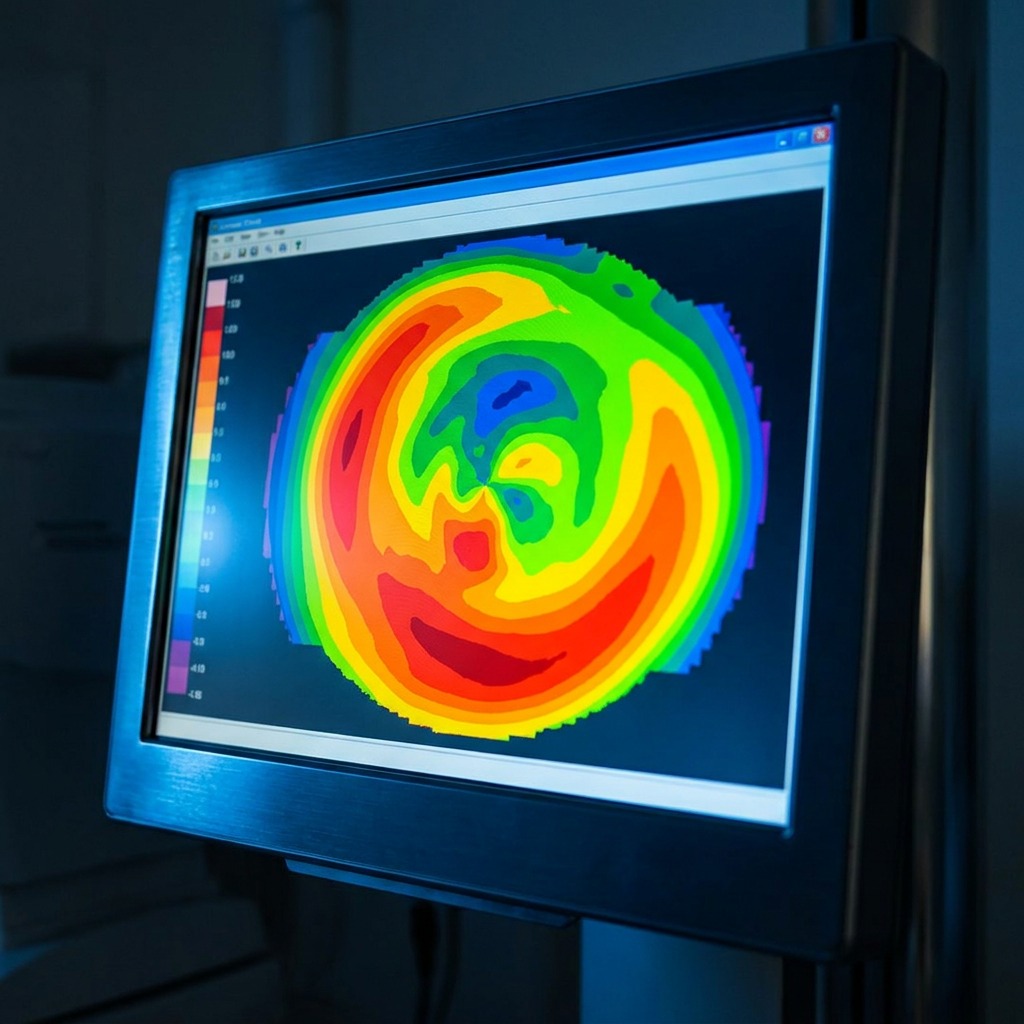
Corneal topography or tomography may be recommended to evaluate the cornea's shape and thickness in greater detail. These tests may be performed by an appropriate specialist if they aren't available at the practice.
Keratoconus Management at VIEW Cove
Keratoconus management depends on the severity of the condition, whether it is progressing, and how well your vision can be corrected.
Some patients can see comfortably with glasses or conventional contact lenses, particularly in the early stages. Others may benefit from specialty lenses designed for irregular corneas.
If keratoconus is progressing, a corneal specialist may recommend treatment to help stabilize the cornea.
Glasses and Contact Lenses
In the early stages of keratoconus, glasses or soft contact lenses may provide adequate vision correction. As the cornea becomes more irregular, these options may no longer correct vision sufficiently.
Scleral Contact Lenses
Scleral contact lenses are larger specialty lenses designed to rest on the white part of the eye, called the sclera, while vaulting over the cornea. A fluid-filled space between the lens and cornea helps create a smoother optical surface, which may improve vision for people with irregular corneal shapes. Because scleral lenses don't rest directly on the cornea, they may also offer comfort advantages for some patients.
Other Specialty Contact Lenses
Depending on your cornea's shape and the severity of keratoconus, other specialty contact lens designs may also be considered. These can include rigid gas-permeable, hybrid, or specially designed soft lenses. Each option has different fitting considerations, benefits, and limitations. Your optometrist can discuss which lens options may suit you.
Corneal Cross-Linking
Corneal cross-linking is a procedure performed by an appropriately qualified eye specialist to help slow or stop keratoconus progression. The procedure uses riboflavin, a form of vitamin B2, and controlled ultraviolet light to strengthen the collagen connections within the cornea.
Cross-linking is intended to stabilize the cornea, not eliminate the need for glasses or contact lenses.
VIEW Cove does not perform corneal cross-linking. If your examination suggests that the condition may be progressing, we can help coordinate an evaluation with a corneal specialist.
Corneal Surgery
In more advanced cases, when other treatment options cannot provide adequate vision or the cornea develops significant complications, a corneal specialist may recommend surgery.
The type of procedure depends on the cornea's condition and the patient's individual needs.
An ophthalmologist with the appropriate expertise performs surgical care.
Frequently Asked Questions
Can Keratoconus Cause Permanent Vision Problems?
Keratoconus can cause lasting corneal changes that affect vision. However, many patients can achieve improved visual clarity with appropriate correction, such as specialty contact lenses. Treatment and monitoring depend on the condition's severity and progression.
Can Glasses Correct Keratoconus?
Glasses may provide adequate vision correction in the early stages. As the cornea becomes more irregular, specialty contact lenses may offer better visual correction for some patients.
Are Scleral Contact Lenses Comfortable?
Scleral lenses rest on the sclera rather than directly on the cornea. Many patients find them comfortable, although comfort and adaptation vary. A professional fitting helps determine whether they're appropriate for your eyes.
Can Keratoconus Be Cured?
No treatment currently reliably restores the cornea to its original shape in every patient. However, treatments such as corneal cross-linking may help stabilize progression, while specialty contact lenses can improve vision for suitable patients.
Will I Need Corneal Surgery?
Not necessarily. Many people with keratoconus manage their vision with glasses or specialty contact lenses. Surgery may be considered in more advanced cases or when other options are insufficient. A corneal specialist can determine whether surgical treatment is appropriate.


Let's Find a Better Way to Support Your Vision
Living with blurry or distorted vision can make everyday activities harder, especially when regular glasses don't provide the clarity you need. At VIEW Cove, we take the time to understand your concerns, evaluate your eye health, and explore specialty contact lens options that may help. Schedule an appointment to discuss your vision and the next steps in your care.